quinta-feira, maio 11, 2006

ESA-image of the week Malasya

The image of the week of Esa is from part of the Malysian peninsula in southeast Asia(unfurtunelly i have never been there). this image was acquired on 23 february 2005 by Envisat with spatial resolution of 300 metres.
http://www.esa.int/esaEO/SEMCNF8ATME_index_1.html

quarta-feira, maio 10, 2006

Latest image of Nasa

Latest image of Nasa
The image shows Mount Ubinas Vulcano in Peru.
This volcano forced the evacuations of the sorrounding villages after eruption in the past 21 of april. the fumes caused respiratory problems and poisoned lifestock.
http://earthobservatory.nasa.gov/Newsroom/NewImages/images.php3

segunda-feira, maio 08, 2006

radio


it's very easy i get tired of earing the same music that is why i don't hear so much mainstrim music, i like diferent music, i like alternative music. i like hearing radio becuase i get tired of the cds with all the same groups, style and voice. radio for me is good because i don't have to do downloads or do a big investigation of what i like. i don't like the majority of the radios and i don't like the majority of the internet radios( too much american music and doesn't have portuguese music) that is why i am all the time earing to http://www.radarlisboa.fm/ a radio now avaiable online from my city Lisbon. i like the majority of the musics and i don't get tired of this musics so easally.
have a great sound where you are

the clash


do you know the clash?
who?
that is the answer that the majority of the time i hear from people, but then i say "should i stay or should i go " and everyboy say, oh, that one, yes i know and i like it!
i have to confess that a few years ago i was like that, and only after borroing the best of the clash i discovered how great this group was and after how important it was.
the clash is considered one of the greatest punk bands of all time. the clash are from the beggining of the british punk. if you listen to the lirics of this group you understand that they are very political and very concern about the problems of the british minorities and working classes, all because of their roots. the clash were also one the first bands to mix rock with reggae and other minorities associated music. that is why i think is important to divulge this great band.


"Formed in the summer of ‘76, The Clash rode the wave of the punk scene and went beyond it in so many ways. Under the guidance of manager Bernard Rhodes, Mick Jones, Paul Simonon and Keith Levene were on the lookout for a frontman. Joe Strummer was in a pub rock band called the 101ers. When he saw The Sex Pistols play live, he knew the 101ers days were over. He was approached by Bernard Rhodes and asked to leave his band and join a tough new band that would rival The Sex Pistols. Terry Chimes took the drum seat and the group became The Clash.
Malcolm Mclaren asked his ex business partner Bernard Rhodes for The Clash to join The Sex Pistols on the now legendary ‘Anarchy in the UK’ tour, by this time Keith Levene had left The Clash.
Their Eponymous debut album ‘The Clash’ was recorded over three weekends in ‘77. This pounding, high velocity record captured the urgency and passion of the times and received huge critical acclaim. The single ‘White Riot’ inspired by Joe and Paul’s participation in the Notting Hill Carnival riots was indicative of the social activist attitude that the band would have throughout their career.
At this time Topper Headon joined the line-up replacing Chimes, and in ‘78 they played what has become a hugely celebrated gig in front of 80,000 people at Victoria Park in east London for Rock Against Racism. The band hit the studio after this to record their second album ‘Give ‘Em Enough Rope’ over three months in the UK and the US with production by Sandy Pearlman. It reached No. 2 in the UK charts in ‘79. With a tougher expanded sound moving on from the immediate music of ‘The Clash’, this second album confirmed the band as the leading light of the Punk movement.
‘Give ‘Em Enough Rope’ catapulted the band onto the US scene and they set out on a tour of the states with Bo Diddley in support. The influences they experienced from this tour were apparent on their return to the UK from a new musical direction, and their classic rock and roll quiffed up look. Whilst in the studio in the US they recorded a cover of ‘I Fought The Law’ (Bobby Fuller Four), now regarded as a classic Clash track.
Other musical influences including dub, reggae, ska and jazz have always been at the heart of the band. When the band re-entered the studio in the summer of ‘79 under the guiding hand of producer Guy Stevens, many of these styles were found in the songs that the band created. These sessions produced ‘London Calling’, voted in Rolling stone magazine as ‘The Greatest record of the 80s’.
The band went back to the states for a six week tour taking Screamin’ Jay Hawkins and the Cramps in tow amongst others. They then embarked on a recording frenzy in New York, Jamaica and London using music styles from rap and funk to dub that the band picked up from their touring and travels.
The band recorded the single ‘Bankrobber’ but the record company would not release it in the UK, huge public demand meant the company had to capitulate. The wealth of material produced around these recording sessions created the triple album ‘Sandinista’, named after left wing freedom fighters in Nicaragua, which was released in 1980.The band insisted upon releasing this album at budget price and its success in the UK was matched and exceeded for the first time by the US.
1981 saw the re-appearance of Bernie Rhodes as manager who they had parted ways with in 1978. Back on board he organised a celebrated run of dates in New York’s Times Square. Threatened with closure by the fire department riots ensued, but to the joy of the fans the shows were allowed to continue. New York was alive with the sounds of funk, dance and early electro and the band listened with eager ears as ever and took many of these influences with them to the studio when they recorded ‘Combat Rock’. Produced by Glyn Johns the album spawned two of the bands most famous songs ‘Rock The Casbah’ and ‘Should I Stay or Should I Go’. On release in 1982 the album reached No. 2 in the UK and jumped straight into the top ten in the US. The band then went on a massive stadium tour culminating in the historic show at Shea Stadium with the Who.
A period of change within the band ensued with Headon being sacked from the group to be replaced by Chimes again, who was subsequently replaced by Pete Howard. The band continued to tour but by 1983, after years of constant touring and recording the strain took its toll and Mick Jones was asked to leave the group, he went on to form Big Audio Dynamite. Nick Sheppard and Vince White were hired and the group continues to tour throughout 1984. The Clash then released ‘Cut The Crap’.
In 1986 The Clash split permanently, Strummer went on to collaborate with Jones on BAD’s album ’10 Upping St’ and wrote and produced his own solo material, Simonon went on to form Havana 3am. The Clash were never forgotten by fans and music pundits alike, constant speculation as to a re-union was always rife. In 1991 Levi’s used ‘Should I Stay Or Should I Go’ in a TV commercial which launched the single to the No. 1 position in the UK when it was re-released by CBS, and introduced the band to a whole new generation of fans.
The Clash were a band that changed lives, with shows that literally ripped up auditoriums. Their political and social ideals were always represented within their songs and never wavered, they were innovative and never afraid to embrace different styles or learn from music of the past and present.
Sadly Joe Strummer died in December 2002, a tragic loss to the world of music; however The Clash will always live on through their music and in the memories of their fans. The band will also be inaugurated into the Rock And Roll Hall Of Fame in 2003 - a fitting legacy for a band who totally changed the face of music for their generation and continue to inspire and excite to this day. "source
http://www.theclashonline.com/ biography

sexta-feira, maio 05, 2006

My first camp

in the day of my birthday i decided to do a totaly diferent day and go to the place where all my workcamp. i was 16 years old and nowhere to go and nothing to do in the summer hollidays so i applyed for my first camp. the chosen place was Vila Viçosa, that was not very far away from almada and i could go from Almada there by bus. it was the first time i travelled alone to somewhere and i was all by mishelf. i choosed also this camp because of the nature of the work, food and place where i would stay was everything perfect and in the end the camp was really great.
so in my birthday day i went back to vila viçosa after 9 years. i was in the association that organised the camp and talked with the guy responsible for all those things, he didn't remember me but he remember all the great things we had done, it was also good to talk about the problems that they have now, knowwhat happened to some people along this time and see pictures of me with 16 years old. i didn't recognise my self.
the day continued goign well, and i was invited for lunch in a restaurant that i was 9 years ago. i went to the castle where i still remember seeing a lot dead hunting animals, going to the gardens where i talked with my friends, the places where i danced for the first time and drunk a lot of "abafado", sweet wine. i was in front of the palace where i played games. i remember it was there that my musical culture started growing, the first time i heard pixies, tithersticks and viollent femmes. i was just a kid and everything there changed my life.
this year my birthday day was really special.

quinta-feira, maio 04, 2006

Snow

A long time ago in winter i decided to go east of my country and buy olive oil. this was in a day that will be forever on my mind, it was the day that there was snow in Lisbon, the last time was about 40 years ago.
This picture was taken in the dry plain alentejo near the calm town of Estremoz not far away from the Spanish border.
It's very rare to snow in Portugal, normally only snows in some certain areas and not in all country. On the south and near the coast is really, really rare.

quarta-feira, maio 03, 2006

international crisis group month report

Last month was a dark month in the world, the political situation got worst in 13 countries and only got better in 2 countries. there is a very high risk of conflict in nigeria, somalia and sri lanka.
but there is also a peace oportunity in Nepal.

Afghanistan:"Taliban "spring offensive" saw increased suicide attacks and bombings in south and east; more expected amidst transition from U.S. control to NATO in south. U.S., UK and national security forces launched its largest operation since 2001 in eastern Kunar province. Heavy fighting erupted in Kandahar as international and local forces clashed with anti-government elements: casualties included 6 police, several civilians and reportedly over 40 Taliban; 4 Canadian soldiers killed in roadside blast 22 April. Earlier 14 militants killed in attacks on checkpoints in Zabul province while 5 Afghan health workers killed in Badghis province. Suspected suicide bombers targeted Italian base in Herat - killing 4 - and U.S. bases at Bagram and in Helmand province. Voting on Cabinet confirmation took place 20 April in lower house of National Assembly. New foreign and defence ministers won vote of confidence in perceived government victory; transport and commerce ministers among 5 rejected".

Chad : The rebels atacked the capital and the goverment accused Sudan of backing up the rebels and cut diplomatic ties with this country and shut the borders. The president threath to shut pipelines if not given acess to funds to buy weapons and at same time France recognised the country goverment.

Egypt:3 explosions in Dahab resort in Sinai 24 April killed 18. No group claimed responsibility but same organisation that carried out 2004 Taba and 2005 Sharm El-Sheikh attacks suspected: 1 suspect killed during police operation 30 April. 2 suicide bombers killed in further attacks on Multinational Force and Observers post in northern Sinai 26 April. Earlier, sectarian
attacks on 3 churches in Alexandria killed 1 and sparked 3 days of protests by Coptic Christians and violent clashes 14-16 April. Hundreds arrested, but government criticised for initially downplaying attacks. 2 judges who had spoken out against
irregularities in 2005 parliamentary elections summoned to 27 April disciplinary tribunal; hearing adjourned to 11 May; police arrested and beat activists protesting summoning. Interior ministry announced over 900 Jamaa Islamiyya members released from prison. President Mubarek pushed through parliament 2-year extension on 1981 emergency law allowing indefinite detention of prisoners 30 April. Wafd party survival in balance after factions clashed over leadership in Cairo 1 April following attempt by ousted party president Noman Gomaa to seize party headquarters by force.

Guinea : a power sturgle inside the president cabinet.

Iran IAEA said Tehran had successfully produced enriched uranium but had defied UN Security Council’s 28 April deadline to stop process. U.S. said would seek new UNSC resolution requiring Iran to stop enrichment or face sanctions. Rhetoric on both sides heated up. with U.S. warning of consequences of continued Iranian defiance, and Tehran vowing to strike U.S. interests around the world if attacked. UNSC permanent members and Germany to meet 2 May to discuss next steps. Iranian forces reportedly shelled Kurdish rebel positions in northern Iraq.

Israel/Occupied TerritoriesViolence escalated between Israelis and Palestinians while tensions rose between Hamas and Fatah. Islamic Jihad suicide bombing in Tel Aviv 17 April killed 9. Hamas government called blast “self-defence” and “natural result” of continued Israeli depredations, leading to international condemnation. Meanwhile, Israeli strikes on Gaza reportedly killed at least 6 children and several militants, in reprisals over continued Qassam rocket attacks. EU and U.S. suspended funding for Hamas-led government but Gulf
countries and Iran pledged over $200 million, and Arab League said to be preparing to transfer 2-months’ wages direct to government employees. Tensions between Hamas and Fatah worsened after new Palestinian Interior Minister Said Siyam announced formation of shadow security force comprising members of militant groups to be led by militant faction leader Jamal Abu Samhadana. Mahmoud Abbas issued presidential decree nullifying proposal, leading to angry Hamas response and clashes between supporters of both sides. New Israeli coalition set to take power, composed of centrist Kadima, left-leaning Labour, ultra-Orthodox Shas and Pensioners’ parties.

Kashmir:Upsurge in attacks by separatists in first major violence since November 2005. 22 Hindu villagers killed by militants in Doda district 1 May. Wave of Srinagar grenade attacks 14 April and gunbattles in Srinagar and Jammu and Kashmir killed at least 17. Kashmiri radical separatist groups claimed responsibility. Senior opposition politician Ali Mohammad Naik wounded and 2 guards killed 17 April in attack claimed by Islamic Front militants. By-elections held for 4 seats for Jammu and Kashmir state assembly. 3 politicians reportedly killed by insurgents. Indian PM Manmohan Singh to meet Kashmiri separatist leaders in New Delhi early May.

Kyrgyzstan "President Bakiyev came under increasing pressure to deal with crime and corruption after prominent pro-democracy activist Edil Baisalov seriously injured in attack by unknown assailant. Baisalov had organised demonstration against criminalisation of politics ahead of 9 April parliamentary by-elections in which alleged organised crime bosses were candidates, including Ryspek Akmatbayev (who won despite questions over legality of his candidacy). Alliance of opposition politicians and NGOs issued 18 April ultimatum to president to tackle problems or resign. 29 April opposition rally ended peacefully after Bakiyev unexpectedly addressed crowd and appealed for patience. President threatened closure of U.S. Manas airbase if new agreement on rent payments not reached by June. "

Myanmar/Burma :Army intensified offensive against Karen communities near new capital Pyinmana and along Thai border: thousands reportedly displaced. U.S. condemned campaign, saying military regime threat to region. Ruling junta threatened National League for Democracy with dissolution, claiming links to terrorist actions. Series of small blasts targeting Yangon infrastructure 20 April came week after government called exiled pro-democracy groups terrorists. ASEAN ministers agreed to continue policy of engagement despite lack of progress on "roadmap to democracy", and failure of ASEAN envoy’s March visit.

Pakistan Pakistan Security situation continued to deteriorate as at least 57 killed in worst terrorist attack in Karachi’s history: suicide bombing of congregation of Sunnis celebrating Eid Milad festival killed entire leadership of Sunni Tehrik group, as well as many leaders of Jamaat Ulema Pakistan (JUP) - both Barelvi religious parties; JUP also partner in Muttahida Majlis-i-Amal 6-party religious alliance. Responsibility for blast unclear: observers suggested intra-Sunni rivalry, others, Deobandi extremist groups. Pro-Taliban militants attacked paramilitary troops near Miranshah, main town of North Waziristan region 20 April reportedly killing 7.

Solomon Islands PM Snyder Rini resigned after 8-day tenure marked by violent riots in capital, Honiara. Demonstrators claimed Rini, elected via secret ballot by newly elected members of parliament 18 April, too closely linked to previous tainted administration, and had used money from Taiwanese or Chinese sources - in context of continuing cross-Strait diplomatic battle over recognition of Taiwan - to bribe his win. Riots targeted Chinatown and left large areas in ruins. Government implemented curfew while Australian-led peacekeeping force - bolstered by additional 110 troops - patrolled city to prevent further violence. Curfew lifted 27 April, with new elections due first week May.

Sri Lanka
Fears of return to full-scale civil war after major upsurge in violence left over 100 dead, and with both government and Liberation Tigers of Tamil Eelam (LTTE) threatening immediate retaliation for further attacks. Government launched air strikes against Tamil positions after suicide bomber injured army chief and killed 10 in Colombo 25 April. Bombing followed 2 weeks of violent attacks against civilians and inter-communal rioting between Sinhalese and Tamils. Before suicide bombing, LTTE had "indefinitely postponed" scheduled second round Geneva talks with government, citing violence against Tamil civilians and restrictions on movement of LTTE leaders.

Timor-Leste
Protest against government sacking of 600 soldiers turned violent 28 April, at least 2 killed; was latest in series of demonstrations by troops - many from west of country - claiming discrimination in military.

The sorce of this info is crisis international and was not writen by me.

terça-feira, maio 02, 2006

almada tour


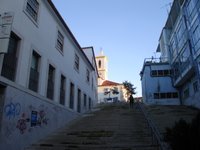
my tour in Almada started in the 25 of april avenue( the day that portugal became a democracy again) the most important artery of the city. the stile of this avenue is very 70s in one part and very 50s in the other.


the second stop was the center point of the city, near S.joao baptista square or also known has red square. its here where you can find two schools a urban garden and the library and also Macdonalds.


the 3rd stop was near the work courthouse and the garden. it's here a good example that is not uncomun to to see comunist symbol everywhere. the text in the statue says "the comunists only work for the hapiness of the people and don't want nothing in exange and i have to be proud to be part of this party".


the 4th stop was in rua capitao leitao the street that used to be the most impotant one. here you can find the cinema that is loosing importance for the big cinema groups) and the old part of almada. this is the important streets to find bars. in the end of the street you find the old city hall and the place where i used to do some theater.


the last stop was to see the lisbon view, near by you have a elevator and the museum of modern art of Almada.

so this is my city

almada


one day a long time ago i decided to go for a walk in my hometown.
Almada is located in the southside of tagus river, the biggest river in the iberian peninsula, and is conected to Lisbon by the 25 of April bridge.
almada is nowadays the biggest city in the southside of river tagus with 156746 inhabitants and also the biggest comunist city in all country. The majority of the population work in Lisbon and in the other citys outside of the Almada. The most important activitys in Almada are connected to 3 sector, comerce and turism. it's in Almada that there are one of the favorite lisbon metropolitan beaches(costa da caparica) and cristo rei, a small replica from the original in Brasil. here you can also find the arriba fossil protected scenary.
Almada is very old and the name come from the arab and means "the mine". almada growth was always conected to the river and to Lisbon. almada had an important riverin port and drydocks, importance that with the passing of year desapeared almost compleately.
the major boom of population to Almada was after the construction of the 25 of april bridge, where people moved to the southside of the river hoping to buy cheapear houses, and also because it was in almada the biggest drydock in europe( this drydock doesn't exist anymore). The drydock explains the reason why the city is comunism being directly connected with working forces.
i like to live in almada but i have to confess that could be better.

sexta-feira, abril 28, 2006

italia2

The last day in the Alps i went for a barbakue where i ate puleta, it's a kind of corn flower thing. after lunch we went to see the vajong dam: The story of vajong is a good example that impact studies have to be done and that not only engeneers are needed. the vajong dam was built in the 60s and was one of the biggest dam in europe, it was built by a private company that was trying to sell it to the public electric company has an hidroelectric. The public company said that would only buy the dam if they emptied all the dam. before emptiyng the dam an german geologist said that if they emptied the dam, part of the hill valley would colapse. The people responsible for the dam didn´t care and part of hill really colapse. When part of the hill fell in the water, it created an giant wave that passed over the dam(that reamained undamadged)and destryed all the villages near the dam, over 2000 people died. nowadays the dam doesn't produce energy anymore and there is very few water in the dam, it's now a turistic place of interest.
After this dark moment we went to visit a city near by. in this city we discovered that this was the home of Mauro Corona, an famous sculputure, mountanist and writer and also a big drinker.
the group decided to talk with this curious character where he talked about ewverithing possible and even showned us that he knew jose saramago and Fernando Pessoa( 2 famous portuguese writers) writings.
The day ended with us all having dinner with this character and then leaving to Paduva.
My journey reached to end on wednesday morning went back to milan and then to lisbon.
here i am back to my normal life but always thinking on my next trip.

Italia

I was in big stress in the passing months, i was tired of being in the same place doing the same things for more than 3 months so i decided to take 5 days of and i bought a plain ticket. I went to Italy.
On saturday i took the easyjet fligth to milan, for the ones that don't know how easy jet works here it goes, you have to pay for all food and drinks and you don't have a amrked seat, you choose the seat has you enter the airplane, so it's like a jungle to see who arrives first to the seat!
i arrived to milan and then directly i went to the train station where i took the train to venice!
i arrived to Venice in the night and was incredible to see the city full of light, the next adventure was to find the right vapureto so i could arrive to the youth hostel. After 30 minutes mission acompliced and i arrived to the youth hostel.
Sunday: the great venice adventure! after putting all my things in the baggage room at the train station i went to the center of venice. i tried to go near the central canal but by land, crossing the most desert street and smeally ones has possible. during this time i saw all the great ancient houses, the fish market, the casino. i only visetd one museum, because i had very few time, so i entered in the museum of modern art and oreintal art. the first was full of paintigs that won or were adquired in the venice bienal along the years, the museum of oriental art was a big collections of artifacts from japan, china and indonesia.
after the museums i continue near the canal until i found a pleasent restaurant only for 6 euros, i was happy. i continued to cross venice, passing the rialto bridge, see the peggy museum building, till my last stop the saint marcus square.
All venice is great and you still can find some deserted streets even in the main streets there is a croud. people are like cheep that only follow the marked signes, me i prefer going to the places where the majority won't go.

after saint marcus square, famous from movies like the indiana jones, i really felt like him, trying to find the holly graill, i even had my personal soundtrack( i was earing massive attack).

At 17.30 i took the train to the Italian Alpes the dolomites where i would stay with my great friend Sandra and her italian familly. The dolomites are part of the alps but the big difference is that they are maid from sediments origin, they are from sedimentary rocks, where today there are mountain a long time ago the was water and i not uncomon nowadays to find fish fossils.

On monday it was great to go with my friends like the great walkers and adventures wal in the mountains, going to the top, walking on snow, raining, in the midle of the woods, beatifull landscape.

segunda-feira, fevereiro 06, 2006

February


The crisis group indetified 6 situations that deteorated in January:

Nepal: the violence between the goverment and the maoist continues

Sri Lanka: is more and more closer to civil war, that confronts the goverment and the tamils

Côte d'ivoire- had 4 days of violent roits

Nigeria(and i thought in moving there)- several attacks to the oil industry in the Delta region

Kyrgyzstan - a string of political of political murders continued

Iran - the novel about the nuclear research facilities

3 situations got better:
Somalia- there was signed a declaration uniting rival factions
Liberia- there is some hope about the new president
Kuwait- was the first gulf state to democratically replace a leader using a constitutional process

sexta-feira, janeiro 27, 2006

Friday, 27 of January


The weekend is here and i am very happy about it. Today


Issues that i think are interassant for me in the current times

-Hamas won the palestinian goverment. The first thing that happened was the confrontation between Hamas supporters and Fatha supporters. http://news.bbc.co.uk/2/hi/middle_east/4654220.stm

-The Chinese map of the world that is said to have 600 years old and says that the Chinese knew the world in those times might be fake. Specialist say that this map might be a version of XVII century french map. Historician specialist also say that the possibility of the Chinese were the first to arrive to west Africa is also fake, the maximum that the chinese might have arrived was South Africa http://geography.about.com/gi/dynamic/offsite.htm?site=http://news.nationalgeographic.com/news/2006/01/0123%5F060123%5Fchinese%5Fmap.html

Have a nice week where ever you are are what you are.
i have just joined the http://www.geekcorps.org/ i really hope i am chosen.

quarta-feira, janeiro 25, 2006

Açores2


S.Jorge is another of the central islands, the product more know for the comun people is it's cheese, "queijo de S.Jorge", and in my opinion a very good one. The main towns in S.Jorge is Velas with 5546 and Calheta with 3976 inhabitants


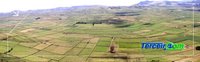
Terceira is the second more important island in the Açores. Angra do Heroismo is the second more important city in Azores and has 34941 inhabitants. Like i said in previous posts Angra is Unesco patrimony of mankinde. The second more important town in Terceira is Praia da Vitória with 20055 inhabitants. It's near Praia da Vitória where there is the American base of Lajes where took place the bad meeting that preceded the invasion of Iraque.

São Miguel is the biggest and most important island in Açores. The main Açores City is here, it's Ponta Delgada that has 64616 inhabitants. The other main towns are Ribeira Grande, Vila Franca do Campo, Nordeste, Lagoa and Povoação. the main atractions include the cozido das furnas, a dish that is cook inside the soil, the land is so hot because of vulcanic activity that food can be cooked by putting the food inside a hole. the second big atraction is Lagoa das Sete Cidades, an old vulcano mouth that is now a lagoon.

Santa Maria is a small island, with São Miguel they are the eastern Açores Group. Santa Maria was the first island to be colonized by the portuguese, much because of her location, it's the most southeastern island. The most important town is Vila do Porto and the all island has 5490 inhabitants.


I really dream to go to Açores, see the vulcanic view, eat the good food, drink the good wine, enjoy the calmness and the green fields, the ocean, the birds, the wales, the tipical portuguese architecture.

The source of the photos are from city halls

terça-feira, janeiro 24, 2006

Açores

Now I am working for a project to Açores without leaving my room and that it's a big torture.
I want to share the beauty of Açores islands, the most remote Portuguese region, in the middle of the Atlantic. All the photos belong to the Açores city halls. Corvo is the smallest island in the Açores and i also the most remote island, this island only has 435 inahabitants.


Flores island is just near Corvo. Flores and Corvo constitute the western group. Flores has two main towns, Lajes das Flores and Santa Cruz das Flores, in the all island there are about 3949 inhabitants.

Faial is already in the central group of islands, a group that is constituted by Pico, São Jorge, Graciosa and Terceira island.
It's in Faial that you can find the Capelinhos Vulcano, that nows is inactive but last eruption was in 1957.
The main city in Faial is Horta, the 3º most important city in the Açores. the island has 14934 inhabitants.
The pico island is the second bigest island in the Açores, and i spoke about it in previous posts.Pico has great viniards and is also the where it is the higgest point in Portugal, the pico mountain with 2351 m.
the main towns in Pico are Madalena, Lajes do Pico and São Roque do Pico, each one with 6074, 3605 and 4900 inhabitants.


Graciosa is a very small island but not the smallest, it has about 4706 inhabitants. The main town is Santa Cruz da Graciosa. Graciosa is the most north island of the Açores.

Tomorrow i will show the rest, Terceira, S.Jorge, Santa Maria and S.Miguel

segunda-feira, janeiro 23, 2006

WHO calls for an immediate halt to provision of single-drug artemisinin malaria pills


This kind of articles always reminds me of the constant gardener film

New malaria treatment guidelines issued by WHO


19 JANUARY 2006 WASHINGTON, DC -- The World Health Organization (WHO) today requested pharmaceutical companies to end the marketing and sale of “single-drug” artemisinin malaria medicines, in order to prevent malaria parasites from developing resistance to this drug.
The use of single-drug artemisinin treatment – or monotherapy – hastens development of resistance by weakening but not killing the parasite. When used correctly in combination with other anti-malarial drugs in Artemisinin Combination Therapies (ACTs), artemisinin is nearly 95% effective in curing malaria and the parasite is highly unlikely to become drug resistant. ACTs are currently the most effective medicine available to treat malaria.
"It is critical that artemisinins be used correctly," said Dr LEE Jong-wook, WHO's Director-General. "We request pharmaceutical companies to immediately stop marketing single-drug artemisinin tablets and instead market artemisinin combination therapies only. The new treatment guidelines we are releasing today provide countries with clear and evidence-based direction on the best treatment options for malaria."
According to the new WHO malaria treatment guidelines, uncomplicated falciparum malaria must be treated with ACTs and not by artemisinin alone or any other monotherapy.
“So far, no treatment failures due to artemisinin drug resistance have been documented, but we are watching the situation very attentively,” said Dr Arata Kochi, the newly appointed director of WHO's malaria department. “We are concerned about decreased sensitivity to the drug in South-East Asia which is the region that has traditionally been the birthplace of anti-malarial drug resistance.”
In Thailand, sulfadoxine-pyrimethanime (SP) was initially almost 100% effective in curing malaria when introduced in 1977, but within five years was curing only 10% of cases due to drug resistance. The once-popular chloroquine has lost its effectiveness in almost every part of the world. Between 1999 and 2004, 95% of African children treated for malaria were given chloroquine, even though the drug only cured half of malaria cases in many countries. Resistance to atovaquone developed within one year of introduction in 1997.
WHO also announced other measures it will take to maximize the benefits and correct use of ACTs. In order to contain the circulation and use of counterfeit antimalarial medicines, WHO plans to strengthen its collaboration with international and national health and regulatory authorities. It is estimated that up to 25% of medicines consumed in developing countries are counterfeit or sub-standard. In parts of Africa and Asia this figure exceeds 50%, according to a WHO report on counterfeit drugs.
Additionally, to anticipate and prevent the onset and spread of drug resistance in the long term, WHO urges the global malaria research community and the pharmaceutical industry to rapidly invest in the design of the next generation of antimalarial drugs. By creating ACTs with multiple-drug combinations and transmission blocking components, resistance can be prevented.
“Our biggest concern right now is to treat patients with safe and effective medication and to avoid the emergence of drug resistance. If we lose ACTs, we’ll no longer have a cure for malaria,” said Dr Arata Kochi,“ and it will probably be at least ten years before a new one can be discovered.”

sexta-feira, janeiro 20, 2006

Unesco 2004


Landscape of the Pico Island Vineyard Culture

The Portuguese people are directly connected to the wine culture, the last landscape to enter the Unesco list shows it very well. This is the second landscape that enters because of the wine culture.
The last one I talked about was in the north of Portugal in the Douro valley, this one is Pico Island in Azores.
Pico is the second largest island in Azores but with very few inhabitants. The wine landscape consists of 987-ha site of long linear walls running inland parallel to the rocky shore. These culture remotes from the first times of occupation of the island in the 15th century and is considered a very good example of response of viniculture on a small volcanic island.
All the area is beautiful, the Wynyard’s, the island, the houses, the wine cellars, churches and ports.
I have never been in Azores but more time passes more I want to go there.

http://www.cm-madalena.pt/